
.png)

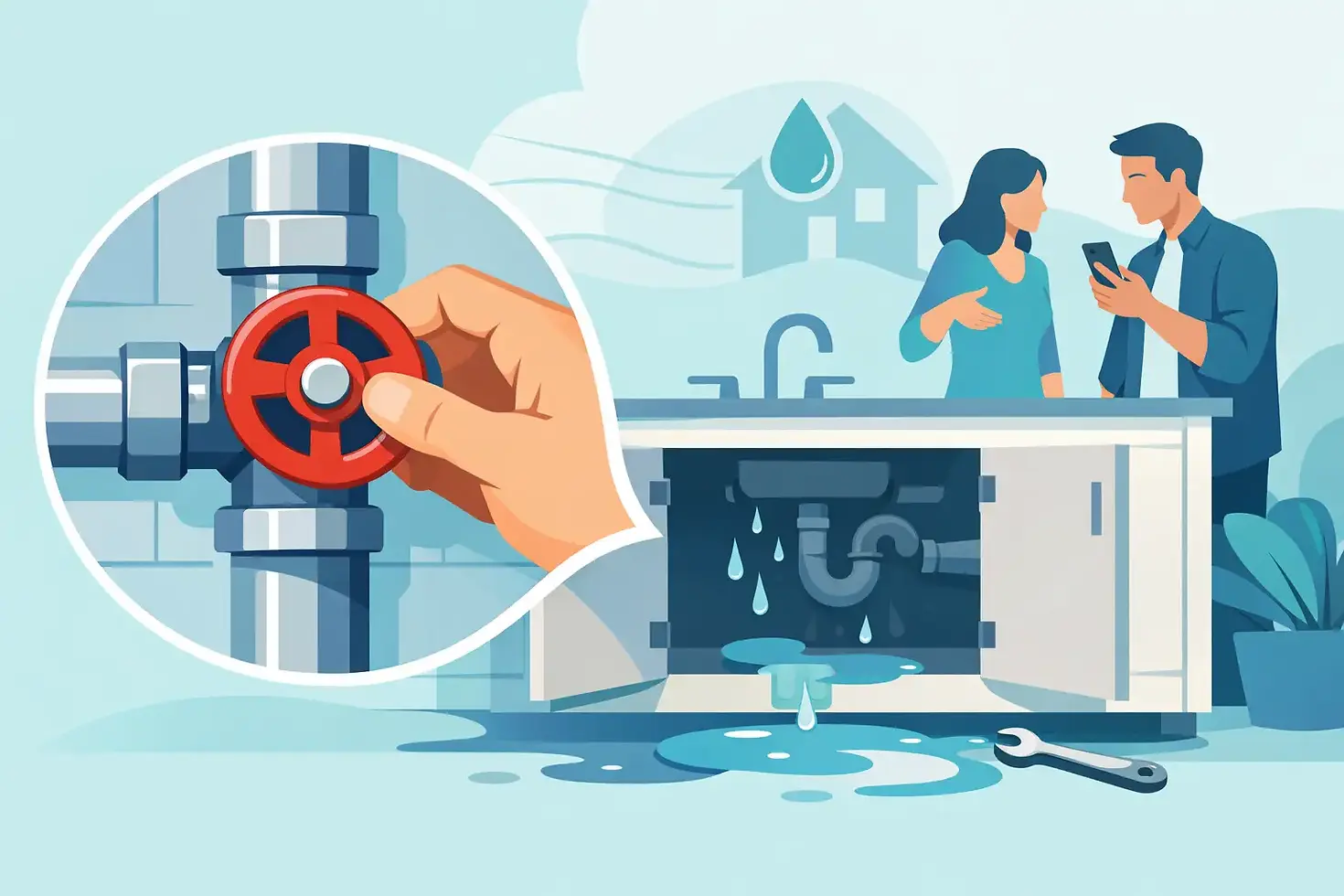
How to Shut Off Water Before a Leak Gets Worse
A burst supply line can put gallons of water on your floor before you have time to search for a plumber. Knowing how to shut off water quickly gives you a real chance to protect cabinets, drywall, flooring, and belongings while help is on the way. The best time to find your shutoff valves is before a toilet overflows or a pipe starts spraying.
Start With the Smallest Shutoff You Can Use
When only one fixture is leaking, shut off water at that fixture first. This keeps the rest of your home supplied with water and prevents you from creating a bigger disruption than necessary.
Look beneath a bathroom or kitchen sink for two small valves on the pipes leading to the faucet. One controls hot water and the other controls cold. Turn the appropriate valve clockwise until it stops. If you are not sure which line is leaking, turn off both valves.
For a toilet leak, look behind or beside the toilet near the floor. The shutoff valve is usually on the wall or floor where the small supply line connects to the toilet tank. Turn it clockwise. If water is running into the bowl continuously, this is often all you need to stop the flow while you arrange a repair.
A refrigerator ice maker, washing machine, dishwasher, and water filter may also have dedicated valves nearby. Washer valves are typically inside the laundry box behind the machine. If a washing machine hose has burst, turn off both the hot and cold valves immediately. Pulling the machine away from the wall can be difficult, so do not put yourself at risk trying to reach a valve through standing water.
Some fixture valves have round handles, while others use a small lever. A round handle generally turns clockwise to close. A lever-style valve is usually closed when the lever sits perpendicular to the pipe. Do not force a valve that is corroded, stuck, or leaking from the stem. It may break and make the problem worse.
How to Shut Off Water at the Main Valve
If water is coming from a wall, ceiling, slab area, water heater, or an unknown source, go straight to the main shutoff valve. This valve stops water to the entire house.
In many Inland Empire homes, the main water shutoff is near the front of the house, in a garage, on an exterior wall, or near the water heater. It may also be in a utility room, laundry area, or a covered box near the property line. Homes vary, especially after remodels, so take a few minutes to locate yours now.
There are two common valve types. A gate-style valve has a round handle and closes by turning clockwise. A ball valve has a straight lever and closes with a quarter turn, until the handle is perpendicular to the pipe. Ball valves are generally easier to operate and provide a clear visual sign that they are closed.
After closing the main valve, open a cold-water faucet at the lowest practical point in the home, such as a first-floor sink or outdoor spigot. This relieves pressure in the plumbing and lets remaining water drain from the lines. Then open the affected fixture carefully to confirm that the flow has stopped.
If water still runs for a short time, do not panic. Water already in the pipes can continue draining. If it continues flowing strongly after a minute or two, the valve may not be fully closed, may be failing, or may not be the correct shutoff.
Do Not Use the Meter Valve Unless You Have No Other Option
The water meter box near the curb often contains a utility-side shutoff. Homeowners sometimes assume this is the first valve to use in an emergency, but it is not always the best choice. The meter assembly may be owned or controlled by the water provider, and using the wrong tool or forcing a stiff valve can damage it.
Your home should have a customer-side main shutoff valve. Use that first whenever possible. If you cannot find it and a major leak is actively causing damage, contact your water provider for guidance or call an emergency plumber. In a true emergency, protecting the home matters, but avoid tampering with locks, tags, or equipment that belongs to the utility.
What to Do After You Turn the Water Off
Stopping the water is the first step, not the whole job. Move rugs, electronics, paper goods, and furniture away from the wet area if it is safe to do so. Use towels, a mop, or a wet-dry vacuum to remove standing water. Open cabinet doors where plumbing is located so moisture does not stay trapped against wood and drywall.
Be careful around electrical outlets, appliances, and ceiling fixtures. If water is near electricity, do not stand in it or touch switches, cords, or appliances. Turn off power at the breaker only if you can reach the panel without crossing wet areas. If you are unsure, wait for a qualified professional.
Take a few photos before cleanup if the damage may involve an insurance claim. Clear pictures of the source, the affected area, and any damaged belongings can be useful later. Then call for repair rather than turning the water back on to test the problem repeatedly.
Special Rules for Water Heaters
A leaking water heater needs extra caution because it involves water, pressure, and either electricity or gas. If the leak is coming from the cold-water supply line above the heater, you may be able to close the valve on that line. If the tank itself is leaking, shut off the home’s main water valve if necessary.
For an electric water heater, turn off the breaker before shutting off the water for an extended period. Heating elements can burn out if the tank is empty or not properly filled. For a gas water heater, do not attempt to disconnect gas piping. If you smell gas, leave the area and contact the gas utility or emergency services from a safe location.
Do not cap, plug, or block the temperature and pressure relief valve. That valve is a safety device. A water heater that is leaking, rumbling, producing rusty water, or releasing water from the relief valve should be inspected by a professional.
When a Leak Means You Should Shut Off Water Immediately
Some situations are not watch-and-wait problems. Shut off the main water as soon as you can if a pipe is spraying, water is pouring through a ceiling, a slab leak is suspected, or a supply line has separated from a fixture. The same goes for a failed washing machine hose, a broken exterior faucet, or water spreading rapidly from beneath a cabinet.
A slow drip is different. If the leak is contained under a sink or at a toilet connection, the local shutoff may be enough while you schedule service. Still, slow leaks can quietly damage cabinets and flooring over time. If you see staining, warped wood, mildew smells, warm spots on the floor, or an unexplained jump in your water bill, the source may be hidden and needs proper diagnosis.
Make a Simple Emergency Plan
Every adult in the home should know where the main water shutoff is and how it works. Show older children where it is too, with the clear instruction not to operate it unless an adult tells them to. Keep the path to the valve clear, especially in garages and utility areas where boxes and storage can block access.
It also helps to label the valve with a simple tag that says Main Water Shutoff. Test it gently once or twice a year, but do not force it. If it is hard to turn, leaking, or badly corroded, have it replaced before an emergency makes it urgent.
When water is shut off and the immediate danger is under control, you have bought yourself time to make a calm, informed repair decision. For homeowners in Riverside, Moreno Valley, Corona, Highgrove, and Fontana, Hiniker Plumbing can identify the source, explain the repair clearly, and help get your home safely back to normal.


Comments