
.png)

What Does Sewer Lining Do for Your Home?
A sewer problem usually starts with something small that keeps coming back - a slow drain, a bad smell outside, or a backup that happens again even after the line was cleared. At that point, many homeowners ask the same fair question: what does sewer lining do, and is it actually a real fix? In plain terms, sewer lining repairs a damaged sewer pipe from the inside so you can restore flow and strength without tearing up large sections of your yard, driveway, or flooring.
What does sewer lining do, exactly?
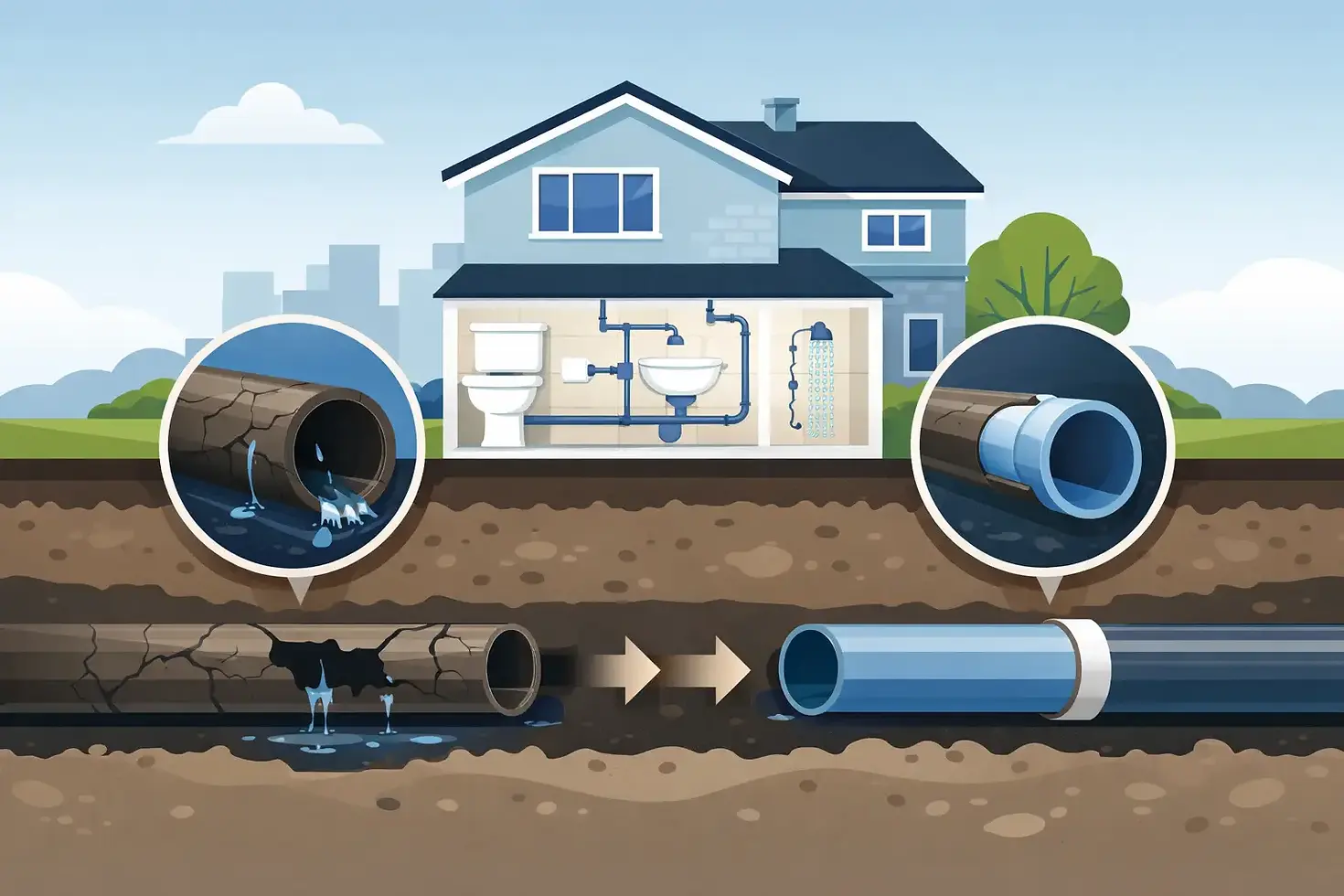
Sewer lining creates a new pipe inside your existing pipe. A flexible liner coated with resin is inserted into the damaged sewer line, positioned in place, and then cured until it hardens. Once that process is finished, the liner becomes a smooth, durable inner wall that helps seal cracks, bridge minor gaps, and improve the line's ability to carry wastewater out of your home.
That is the practical answer, but homeowners usually want the bigger picture. Sewer lining is meant to solve the kind of pipe damage that causes recurring trouble but does not always require full pipe replacement. If your sewer line has cracks, root intrusion, corrosion, small leaks, or worn sections, lining may allow a plumber to repair the pipe with far less digging than a traditional replacement.
For many families in Riverside and San Bernardino County, that matters just as much as the repair itself. Nobody wants a plumbing project that turns the front yard into a trench if there is a reliable alternative.
How sewer lining helps a damaged sewer pipe
The main job of sewer lining is to extend the life of the existing sewer line. Older pipes can wear out from age, shifting soil, invasive tree roots, or long-term corrosion. Even when the pipe has not completely collapsed, damage inside the line can keep causing clogs, weak flow, and sewage backups.
By adding a hardened inner layer, sewer lining can restore the pipe's structure and reduce places where waste or debris gets hung up. The new interior is smoother than many old pipe materials, which can help wastewater move more efficiently. It also closes off many entry points that roots use to sneak into the line.
This is why sewer lining is often recommended after a camera inspection shows damage that is serious enough to need repair, but not so severe that the entire line has to be excavated and replaced. It is not a shortcut. When used in the right situation, it is a legitimate long-term repair.
What does sewer lining do compared to traditional replacement?
Traditional sewer replacement usually means digging a trench to expose and remove the old pipe. Sometimes that is the right call. If a line has collapsed, has major bellies, or is too badly offset, excavation may still be necessary.
Sewer lining takes a different approach. Instead of removing the old pipe, it uses that existing pipe as a host for the new inner liner. That often means less disruption to landscaping, less damage to concrete or hardscaping, and less cleanup around your property.
For homeowners, the biggest difference is usually the mess. A conventional sewer replacement can involve heavy equipment, days of digging, and additional restoration costs after the plumbing work is done. Lining often reduces those headaches. It may also shorten the job timeline, though that depends on the pipe condition, access points, and how much prep work is needed.
The honest answer is that sewer lining is not always cheaper in every situation. If a pipe is easy to reach and only a short section needs replacing, excavation may sometimes make more sense. But when the sewer line runs under landscaping, patios, driveways, or parts of the home, avoiding major digging can be a real financial advantage.
Signs sewer lining might be the right fix
Most homeowners do not call for sewer lining because they already know they need it. They call because something feels off and keeps getting worse. Repeated drain backups, gurgling toilets, sewage odors, wet spots in the yard, or slow drains in multiple fixtures can all point to a sewer line problem.
The next step is not guessing. A camera inspection is what tells you what is actually going on inside the pipe. That matters because the same symptoms can come from very different causes. One home may have roots entering through cracked joints. Another may have a crushed section that lining cannot solve. Another may just need thorough cleaning.
If the inspection shows cracks, minor separations, corrosion, or root intrusion without full structural failure, sewer lining may be a strong option. If the line is severely collapsed or badly misaligned, a different repair may be needed. This is where clear advice matters. Homeowners deserve to know not just what can be sold, but what will actually hold up.
The sewer lining process in plain English
Sewer lining starts with inspection and cleaning. The line has to be cleared of debris, buildup, and roots so the liner can bond properly to the inside of the pipe. In many cases, hydro jetting is used to clean the line thoroughly before the repair begins.
After that, measurements are taken and the liner is prepared. The resin-coated liner is inserted into the pipe through an access point and guided into the damaged area. Once it is in place, it is inflated or otherwise fitted tightly against the existing pipe wall and left to cure.
As the resin hardens, it forms the new interior pipe surface. After curing, the plumber reinspects the line with a camera to make sure the liner is properly installed and the flow path is open. If there are branch connections that need reopening, those are typically cut back in with specialized equipment.
From the homeowner's side, the process is far less invasive than people expect when they hear the words sewer repair. That does not mean it is a casual job. It still takes the right equipment, proper prep, and accurate diagnosis.
Benefits of sewer lining for local homeowners
For many homes in the Inland Empire, the biggest benefit is preserving the property while fixing the problem. If your sewer line runs beneath mature landscaping, decorative concrete, a driveway, or areas near the slab, reducing excavation can save a lot of stress.
There is also the reliability factor. A properly installed liner is designed to resist corrosion and help prevent roots from entering through the same weak spots that caused trouble before. Because the inner wall is smooth, it can also help improve flow compared to rough, aging pipe surfaces.
Another benefit is peace of mind. Recurring sewer issues wear homeowners down fast. If you have already paid for repeated drain clearing only to have the same problem come back, sewer lining can address the source of the issue instead of just treating the symptom.
When sewer lining is not the best option
A trustworthy plumber should be clear about this part. Sewer lining is a strong repair, but it is not magic. If the pipe has collapsed, if there is a major sag in the line, or if sections are so badly damaged that they cannot support the liner, excavation and replacement may still be the better path.
It also depends on access and pipe layout. Some systems are better candidates than others. That is why an inspection matters more than any blanket promise. The goal should never be to force a trenchless repair onto every problem. The goal is to fix the line the right way.
That is especially important for homeowners who have been burned before by vague pricing or rushed recommendations. A sewer repair is a big decision. You should get a straightforward explanation of what the camera found, what your repair options are, and why one method fits better than another.
What does sewer lining do for the long term?
Done properly, sewer lining gives an aging pipe a new interior life. It can help prevent leaks, reduce future root intrusion, improve drainage performance, and postpone or eliminate the need for major excavation. For the right sewer line, it is not a temporary patch. It is a structural repair designed to last.
That said, long-term success still depends on the condition of the pipe, the quality of the installation, and whether the line was cleaned and prepared correctly beforehand. Like most plumbing work, the method matters, but the workmanship matters just as much.
For homeowners who want straight answers, that is the real value of sewer lining. It is not about fancy terminology. It is about solving a sewer problem with less disruption when the pipe condition allows for it. Companies like Hiniker Plumbing see that concern every day from local families who want the issue handled quickly, fairly, and without turning the property upside down.
If your drains keep backing up and you are tired of guessing, the best next step is simple: find out what the line actually looks like. A clear inspection tells you whether sewer lining is the smart fix or whether your home needs a different repair. Either way, getting the truth early usually saves money, stress, and one more weekend dealing with a problem that should have been fixed for good.


Comments