


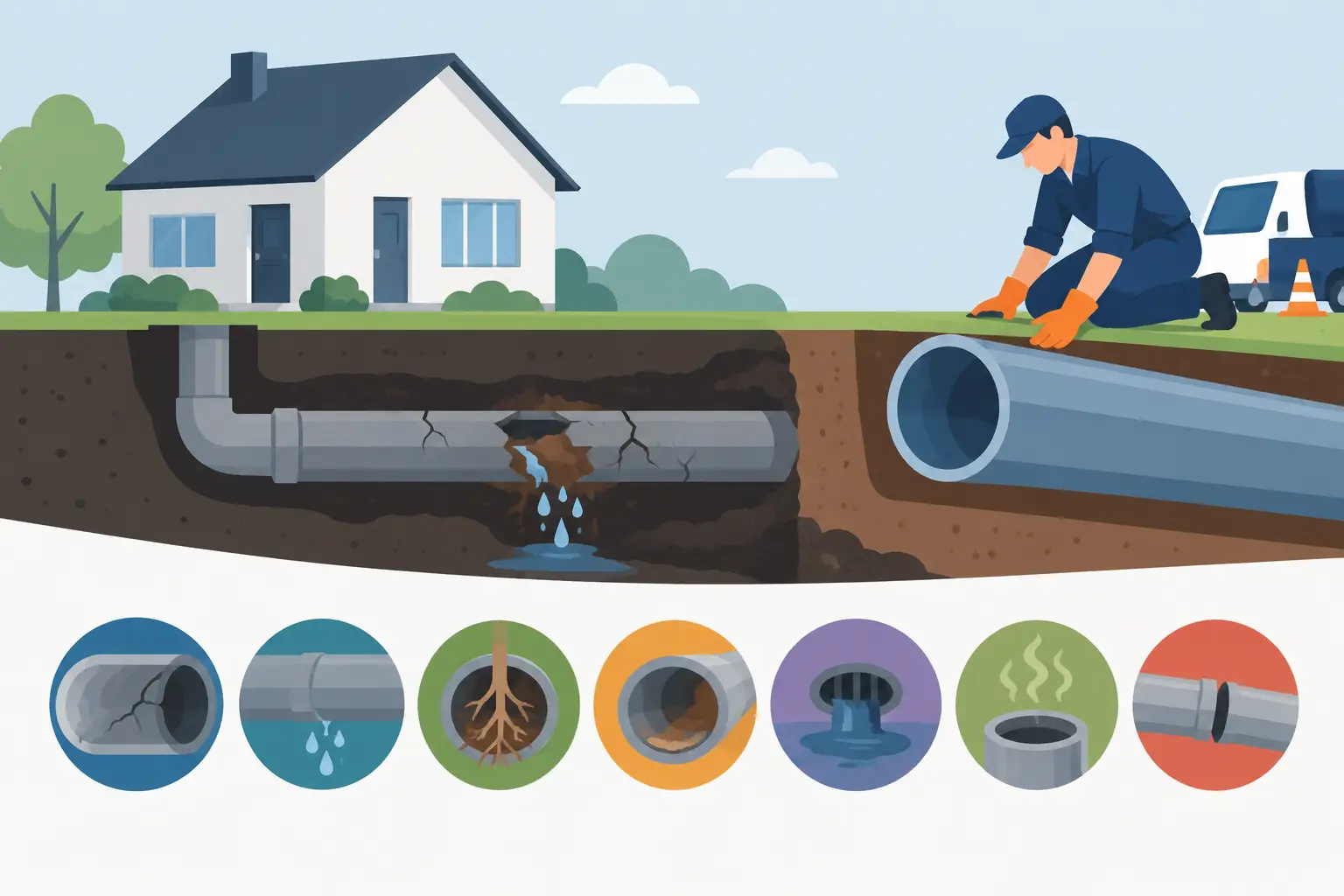
When to Replace Sewer Pipes: 7 Clear Signs
A sewer problem rarely starts with a dramatic backup. More often, it starts with a slow tub drain, a toilet that gurgles after flushing, or a patch of lawn that stays suspiciously green. Knowing when to replace sewer pipes can keep a manageable plumbing issue from becoming a messy, expensive emergency.
For homeowners, the hard part is that recurring drain trouble does not automatically mean the entire sewer line is failing. A professional inspection can show whether you need cleaning, a focused repair, sewer lining, or full replacement. The honest answer depends on what is happening inside the pipe, not on a guess made from above ground.
When to Replace Sewer Pipes Instead of Repairing Them
A sewer line should be replaced when the pipe has widespread damage, repeated failures, or deterioration that will continue to cause problems after a temporary repair. One clog does not usually meet that standard. Several problems over time might.
Here are seven signs it is time to have the line professionally evaluated and possibly replaced.
1. Multiple Drains Back Up at Once
When a toilet, shower, and sink are all slow or backing up, the blockage may be in the main sewer line rather than one fixture drain. If drain cleaning restores flow but the problem returns in a short period, there may be root intrusion, a break, a belly in the line, or heavy internal pipe deterioration.
Repeated backups are not something to live with. Sewage inside the home can damage flooring, walls, and personal belongings, while creating a sanitation concern for your family.
2. You Have Frequent Root Intrusion
Tree roots are drawn to the moisture and nutrients around sewer pipes. They can enter through small cracks, loose joints, or openings in older pipe materials. Hydro jetting or root cutting can clear roots from the line, but it does not repair the opening that allowed them in.
If roots return again and again, the pipe needs more than routine maintenance. Depending on its condition, sewer lining may seal the damaged section from within. If the line is crushed, separated, badly offset, or extensively invaded, replacement may be the more dependable choice.
3. A Camera Inspection Shows Cracks, Collapsed Sections, or Offsets
A sewer camera inspection takes the guesswork out of a major plumbing decision. It allows a technician to see the actual condition of the pipe, locate trouble spots, and determine how far the damage extends.
Cracks and small joint gaps may be candidates for a targeted repair or lining. A collapsed pipe, severe sag, or major separation between pipe sections is different. Those conditions can restrict flow even after cleaning and typically call for replacement of the affected line.
4. Sewage Odors Keep Coming Back
Your sewer system is designed to carry wastewater and sewer gas safely away from the house. Persistent sewer odors inside, around the foundation, or in the yard can signal a cracked sewer line, failed connection, or damaged venting. The source needs to be identified before anyone recommends a solution.
Do not try to cover the smell with air freshener and hope it fades. A continuing sewer odor deserves prompt attention, especially if it is paired with slow drains or wet areas outside.
5. The Yard Has Wet, Sunken, or Unusually Lush Areas
A leaking underground sewer line can release wastewater into the soil. In some cases, homeowners notice soft ground, a dip in the yard, standing water without an obvious irrigation issue, or one strip of grass growing faster and greener than the rest.
These signs are not proof by themselves. Landscape drainage and sprinkler leaks can look similar. But when they occur alongside drain backups or odors, a sewer camera inspection is a smart next step.
6. Your Home Has Aging Clay, Cast Iron, or Orangeburg Pipe
The age and material of a sewer line matter, particularly in established Riverside-area neighborhoods. Clay pipe can develop root issues at the joints. Cast iron can corrode from the inside and build up scale that narrows the pipe. Orangeburg, a fiber-based pipe used in some older homes, can deform and deteriorate over time.
Material alone does not mean replacement is urgent. A camera inspection may show that much of the line remains serviceable. Still, an aging line with recurring issues should be assessed before it turns into an emergency repair.
7. Repairs Keep Adding Up Without Solving the Cause
There is a point where paying for another clearing, spot repair, or cleanup no longer makes financial sense. If you have had several sewer service calls and each one only buys a little time, ask for clear answers about the pipe's overall condition.
A trustworthy plumber should explain what the camera found, show you the problem when possible, and lay out realistic options. You deserve to understand the difference between a repair that makes sense today and a replacement that prevents more disruption later.
Sewer Repair, Lining, or Replacement: What Is the Difference?
The right solution depends on the type, location, and extent of damage. There is no one-size-fits-all answer, and homeowners should be cautious of anyone who recommends full replacement before inspecting the line.
A basic drain cleaning may be appropriate for a one-time blockage caused by buildup, wipes, grease, or light roots. Hydro jetting can provide a more thorough cleaning for heavy buildup and recurring root debris when the pipe is structurally sound enough for the process.
A spot repair addresses one accessible damaged area. It can be cost-effective when the rest of the sewer line is in good shape. Sewer lining creates a new, durable pipe within certain existing pipes, often reducing the need for excavation. However, lining is not suitable for every situation. A line that is collapsed, severely misaligned, or has a major belly may need excavation and replacement to restore proper slope and flow.
Full replacement is usually the long-term answer for extensive deterioration, repeated root entry across the line, multiple broken sections, or a pipe that has lost its structural integrity. It can be more involved upfront, but it may spare you the cycle of backups, emergency calls, and repeated repair costs.
Why a Camera Inspection Should Come First
A camera inspection is one of the most valuable steps before making a sewer decision. It can identify the location of a blockage, measure the distance to damage, reveal the pipe material, and show whether trouble is isolated or widespread.
It also gives you a basis for comparing recommendations. If a contractor says you need replacement, ask what the camera showed and whether the problem affects a small section or the entire line. Clear documentation helps you make a decision based on facts rather than pressure.
At Hiniker Plumbing, the goal is not to sell a homeowner the biggest job. It is to identify the real issue, explain the options plainly, and recommend the repair that makes sense for the home and budget.
What to Do If You Suspect a Sewer Line Problem
First, limit water use if several fixtures are backing up. Avoid running the dishwasher, washing machine, or long showers, since added water can worsen a backup. If sewage has entered the home, keep children and pets away from the affected area until it can be cleaned safely.
Next, schedule a professional sewer camera inspection. Be ready to share when the problem began, which fixtures are affected, whether it happens after laundry or showers, and whether the line has been cleaned or repaired before. Those details help narrow down the cause.
If replacement is recommended, ask whether the work can be limited to a damaged section, whether sewer lining is an option, how access will affect landscaping or hardscape, and what permit requirements apply. A good plumbing company will answer directly, provide transparent pricing, and explain the work before it begins.
Do Not Wait for the Next Backup
Sewer pipes are out of sight, but they should not be out of mind when warning signs keep repeating. A slow drain may be simple. A pattern of backups, odors, roots, and soggy ground deserves a closer look. Getting an honest camera diagnosis now can give you time to choose the right fix before your sewer line chooses the timing for you.


Comments