


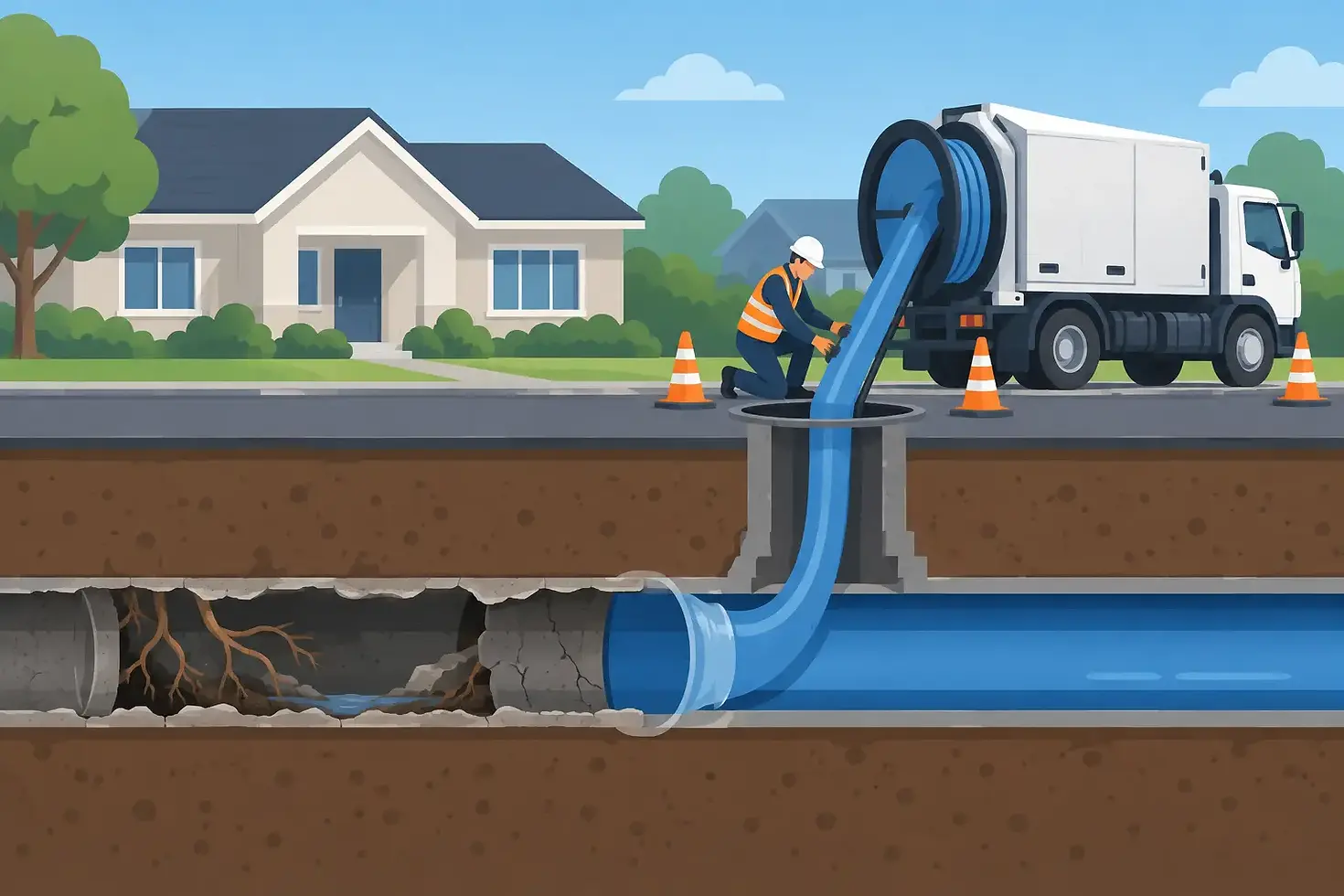
How Trenchless Technology Repairs Sewer Lines
A sewer problem is stressful enough. Finding out that a repair could mean tearing through your lawn, landscaping, patio, or driveway can make it feel even worse. Trenchless technology gives many homeowners a better option: repairing or replacing a damaged sewer line through small access points instead of excavating the entire pipe path.
That does not mean every sewer issue can be fixed without digging. The honest answer depends on what a camera inspection finds, where the damage sits, and whether the existing pipe can support a trenchless repair. But when conditions are right, this approach can restore your sewer line with far less disruption to your property.
What Is Trenchless Technology?
Trenchless technology is a group of pipe repair methods that avoid the long, open trench traditionally used to reach a buried sewer line. Rather than exposing every foot of pipe, a plumber typically works from one or two carefully chosen access points.
For homeowners, the biggest benefit is simple: less digging often means less damage to restore afterward. A conventional sewer replacement may require removing grass, shrubs, concrete, hardscape, or sections of a driveway to reach the line. A trenchless method can often preserve much of that work.
The word “trenchless” can be a little misleading, though. Small holes may still be needed at the ends of the pipe, near a cleanout, or at a connection point. The difference is that the yard does not have to become one long construction zone.
The Two Main Types of Trenchless Sewer Repair
Most residential trenchless work falls into two categories: pipe lining and pipe bursting. They solve different problems, and neither should be treated as a one-size-fits-all answer.
Sewer Pipe Lining
Pipe lining, sometimes called cured-in-place pipe lining, creates a new pipe inside the old one. After the sewer line is thoroughly cleaned and inspected, a flexible liner coated with resin is inserted into the damaged pipe. The liner is positioned, expanded, and cured until it hardens into a durable, joint-free interior pipe.
Lining is often a strong option when the existing pipe is still generally intact but has cracks, corrosion, root intrusion, leaking joints, or small gaps. Because the old pipe remains in place as a host, it must have enough structural integrity and a usable path for the liner.
A lined pipe has a slightly smaller inside diameter than the original, but that is not usually a problem when the line is properly sized and thoroughly cleaned first. In some cases, the smooth interior of the new liner can improve flow compared with an older pipe that has rough buildup or separated joints.
Pipe Bursting
Pipe bursting is used when the existing sewer line is too badly damaged to line, has collapsed sections, or needs to be replaced with a new pipe. A bursting head is pulled through the old line, breaking apart the failing pipe while pulling a new pipe into place behind it.
This method can be especially useful for outdated clay, cast iron, Orangeburg, or severely compromised sewer pipes. Like lining, pipe bursting usually requires access pits, but it can avoid opening the entire route from the house to the city sewer connection.
The right method comes down to the pipe’s condition. A camera inspection is not an upsell or a guesswork step. It is how a plumber sees the real issue before recommending a repair that affects your home and budget.
When Trenchless Technology Makes Sense
Trenchless repair is often worth considering when a sewer line runs beneath valuable or difficult-to-replace surfaces. Think mature landscaping, a decorative patio, a concrete driveway, a garage slab, or a walkway that would otherwise need demolition and reconstruction.
It can also make sense when the damage is spread across a long section of pipe. Repeated root intrusion, deteriorating joints, and aging materials tend to cause recurring clogs over time. Clearing the line may restore flow for now, but it does not repair cracks or failing connections underground.
Common warning signs include slow drains throughout the home, recurring backups, gurgling toilets, sewage odors, wet or unusually green patches in the yard, and roots repeatedly pulled out during drain cleaning. One clogged sink does not automatically point to a sewer-line failure. Multiple fixtures draining poorly at the same time deserve a closer look.
For Inland Empire homes, soil movement, older plumbing materials, tree roots, and long-term wear can all contribute to sewer trouble. The goal is not to jump straight to a major repair. It is to identify whether the problem is a removable blockage, a localized break, or a pipe that is failing along more of its length.
When Digging May Still Be Necessary
Trenchless technology is valuable, but it is not magic. A pipe with major offsets, a complete collapse, severe belly sections, or an unsuitable slope may not be a good candidate for lining. Pipe bursting may help in some of these situations, but site conditions still matter.
A sewer line that is buried too shallowly, crosses an area with limited access, or connects to damaged fittings may require a combination of trenchless and traditional excavation. Sometimes a short, targeted excavation is the most practical and cost-effective fix.
This is where honesty matters. The best recommendation is not automatically the least invasive option or the most expensive one. It is the repair that addresses the actual condition of the line and is likely to hold up over time.
What the Trenchless Repair Process Looks Like
A professional process starts with a sewer camera inspection. The technician runs a camera through the line to locate blockages, roots, cracks, separated joints, corrosion, or collapsed sections. The footage also helps identify pipe material, depth, and the location of the damage.
If the line needs cleaning, hydro jetting or another appropriate cleaning method may be used before the repair. For a liner to bond correctly, the pipe needs to be cleared of roots, scale, and debris. Skipping this preparation can compromise the repair.
Next, the plumber determines whether lining or pipe bursting is appropriate and explains where access will be needed. You should know what work is planned, what surfaces may be affected, what the expected timeline is, and what the price includes before the job begins.
After installation, another camera inspection may be used to confirm the new pipe or liner is properly positioned and flowing as expected. A responsible contractor should leave you with a clear understanding of what was done and what to watch for going forward.
Is Trenchless Sewer Repair More Expensive?
The installation price of trenchless repair can sometimes be higher than a simple excavation quote. But comparing only the plumbing portion of the estimate can be misleading. If traditional digging destroys a driveway, landscaping, fencing, irrigation, or concrete, the restoration costs can add up quickly.
Trenchless technology can reduce those restoration expenses and shorten the disruption around your home. It may also limit the inconvenience of having a large trench open across your property for several days.
Still, lower disruption does not automatically mean lower total cost in every situation. A short sewer repair in an open dirt area may be less expensive with conventional excavation. A long pipe beneath a driveway or landscaped yard may strongly favor a trenchless approach. The fair way to compare options is to look at the full job, including access, repair method, permits if required, and restoration afterward.
Questions to Ask Before Approving a Repair
Before agreeing to any sewer repair, ask to see the camera findings and have the problem explained in plain language. You should also ask whether the damage is localized or widespread, whether cleaning alone is a reasonable first step, and why one repair method is being recommended over another.
It is also reasonable to ask how much digging will be required, what happens if the pipe condition differs from the camera findings, and whether the estimate includes cleanup and surface restoration. Clear answers are a sign that the company respects both your home and your budget.
At Hiniker Plumbing, the goal is to give Riverside-area homeowners a straight answer after the line is inspected. Sometimes that means trenchless repair. Sometimes it means a simpler drain cleaning or a targeted excavation. Either way, you deserve to understand the problem before deciding how to fix it.
If you are dealing with recurring sewer backups or a line that keeps clogging, do not wait for a full sewage spill to force the issue. A camera inspection can show what is happening underground and help you choose a repair that protects your property without paying for work you do not need.


Comments