
.png)

When Should Pipes Be Replaced? 7 Warning Signs
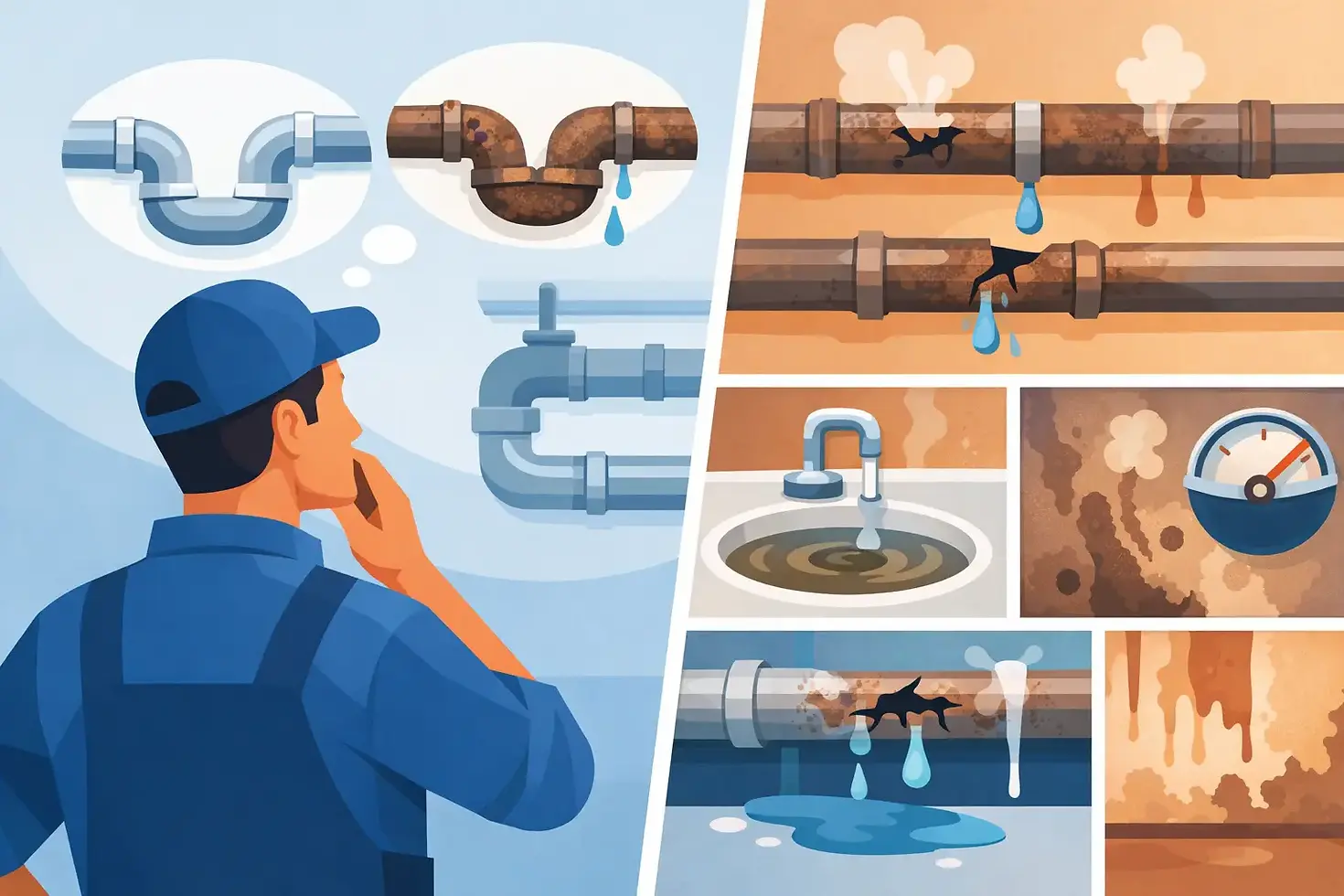
A small brown stain on the ceiling, water pressure that has slowly faded, or a leak that keeps returning in a new spot can leave homeowners asking: when should pipes be replaced? The answer is rarely based on age alone. A single damaged section may need a targeted repair, while repeated trouble throughout an older plumbing system can make replacement the more honest, cost-effective choice.
For homeowners in Riverside and nearby Inland Empire communities, knowing the difference can prevent a manageable plumbing concern from turning into water damage, mold, or a costly slab leak.
When Should Pipes Be Replaced Instead of Repaired?
A repair makes sense when the problem is isolated. For example, a pipe was damaged during remodeling, a fitting has failed, or one accessible section has corroded while the rest of the system is in good condition. Replacing that section can restore dependable service without unnecessary work.
Replacement deserves a serious conversation when failures are becoming a pattern. If you have fixed several leaks in the past few years, find corrosion in more than one area, or have aging pipes made from materials known to fail, patching each new issue can become a cycle of bills and disruption. The cheapest repair today is not always the fairest long-term solution.
A professional inspection helps separate a local problem from a system-wide one. Camera inspections, pressure testing, leak detection, and a close look at exposed pipe can reveal whether your plumbing still has useful life left.
7 Signs Your Home May Need New Pipes
1. You Have Recurring Leaks
One leak does not automatically mean every pipe needs to go. But leaks appearing in different rooms, under the slab, or behind walls often point to widespread corrosion or deteriorating material. Once a pipe system starts failing in multiple places, each repair may simply be buying time until the next weak spot opens up.
Pay attention to how often leaks occur and where. A plumber who explains the condition of the full system, not just the leak in front of them, gives you the information needed to make a sound decision.
2. Your Water Is Rusty, Yellow, or Metallic-Tasting
Discolored water can come from a water heater, municipal supply work, or sediment, so it should be diagnosed before assuming the pipes are at fault. Still, rusty or yellow water that appears regularly, especially from both hot and cold fixtures, can signal corrosion inside older galvanized steel pipes.
Corrosion narrows the inside of the pipe and eventually creates pinhole leaks. A metallic taste or visible particles in water is another reason to have the plumbing evaluated promptly.
3. Water Pressure Has Dropped Throughout the House
Low pressure at one faucet may be a clogged aerator or a fixture issue. Low pressure at several fixtures is different. Mineral scale and internal corrosion can restrict water flow inside aging pipes, especially in older galvanized systems.
The issue may build gradually enough that a household adapts to it. Then a guest notices that the shower barely rinses shampoo or the washing machine takes forever to fill. Restoring pressure may require more than replacing a faucet or showerhead.
4. Pipes Show Visible Corrosion or Damage
Look at accessible pipes under sinks, around the water heater, in the garage, or near exposed plumbing connections. Flaking, discoloration, greenish buildup on copper, rust, bulges, or damp areas around pipe joints all deserve attention.
Surface marks do not always mean a pipe is about to burst. But they are useful clues. A qualified plumber can tell whether the issue is a minor fitting repair, external moisture, or deterioration that extends beyond the visible section.
5. You Hear Banging, Rattling, or Constant Water Sounds
Some plumbing noises are repairable without replacing pipes. A water hammer, for instance, may be caused by loose pipes, failing shutoff valves, or pressure problems. But persistent banging combined with leaks, weak pressure, or corrosion can indicate a larger issue.
Also listen for water running when every fixture is off. That sound can point to a hidden leak. In homes with plumbing under concrete, early slab leak diagnosis matters because waiting can damage flooring, foundations, and cabinetry.
6. Your Home Has Outdated Pipe Materials
The type of pipe in your home changes the conversation. Galvanized steel pipes are prone to rust and internal buildup as they age. Older cast-iron drain lines can crack, corrode, sag, or develop rough interiors that catch waste and cause repeat clogs.
Polybutylene supply pipes, found in some homes built from the late 1970s through the mid-1990s, are also a concern because they have a documented history of premature failure. If your home has one of these materials, proactive replacement may be wiser than waiting for an emergency.
Copper can last for decades, but it is not permanent. Water chemistry, installation quality, and soil conditions can contribute to pinhole leaks. Newer PEX piping is often a practical replacement option because it resists corrosion and can be installed with less wall disruption in many homes. The right material depends on the home, local code requirements, budget, and where the piping runs.
7. Sewer Backups or Drain Clogs Keep Coming Back
Frequent drain backups are not always caused by a failing sewer line. Grease buildup, wipes, tree roots, or a single blockage may be the culprit. Yet when a home has recurring clogs in several drains, slow drains after cleaning, sewage odors, or backups at the lowest fixture, the sewer line needs a closer look.
A camera inspection can show cracks, root intrusion, offsets, corrosion, or collapsed sections. In some cases, sewer lining can restore a damaged line without full excavation. In others, replacement is the dependable choice. The point is to diagnose before digging or committing to a major repair.
Pipe Lifespan Is a Clue, Not a Deadline
Homeowners often hear broad estimates for pipe lifespan, but real-world conditions matter more than a calendar. Copper supply lines may last 50 years or more. Galvanized steel often has a shorter practical life, commonly around 20 to 50 years. Cast-iron drain piping can last several decades, while its actual condition depends heavily on soil, maintenance, and previous repairs.
Hard water, shifting soil, high water pressure, poor installation, and chemical drain cleaners can all shorten a system's life. A 40-year-old pipe system with no leaks and good water flow may need monitoring rather than replacement. A 15-year-old system with repeated failures needs answers now.
What to Expect From a Pipe Replacement Evaluation
A trustworthy plumbing evaluation should begin with questions: Where have leaks occurred? Are problems limited to hot water, cold water, or drains? Has pressure changed? Is there a history of sewer backups or slab leaks?
From there, the plumber may inspect exposed piping, test pressure, check fixtures, use leak detection equipment, or run a camera through drain and sewer lines. You should receive a clear explanation of what was found, which options are reasonable, and what each option is expected to solve.
For a whole-home repipe, ask how access holes will be handled, whether drywall repair is included, what material is recommended, and how long water service may be interrupted. Full replacement is disruptive, but it can also be less disruptive than living through repeated emergency leaks and wall repairs.
Do Not Wait for a Major Burst
A burst pipe is an emergency, not a maintenance plan. If you see active leaking, water stains spreading, unexplained high water bills, sewage backups, or a sudden drop in pressure, schedule an inspection quickly. Turning off the main water supply when a leak is severe can limit damage while you wait for help.
Hiniker Plumbing approaches pipe concerns the way homeowners deserve: with a straightforward diagnosis, clear options, and no pressure to replace what can honestly be repaired. If your pipes are showing their age, getting answers early gives you more control over the cost, timing, and scope of the work.
Your plumbing does not need to be perfect to be worth protecting. It just needs a clear diagnosis before a small warning sign becomes the repair that interrupts your whole home.


Comments